
- Published on
The Biggest Problem with Fellowship
- Authors
- Name
- edstef
- @epmeddie
The Fellowship open beta took place this past weekend , and as it comes to an end I want to point out a major problem I found while giving the game a try.
Introduction
For those who don’t know, Fellowship describes itself as the first ever MODA - Multiplayer Online Dungeon Adventure which they say is a PVE only MOBA (like League of Legends) mixed with end game MMO content. The gameplay itself looks identical to M+ from World of Warcraft, and playing it feels like WoW but with slightly more cartoony graphics, like the Valorant of M+.
It takes the preset champion aspect from MOBAs, and RPG elements like loot and gear to create a game where anyone can drop in, select a champion and play the content without needing to grind, while still offering rewards and progression.
The game has great visuals, engaging mechanics, and is actually quite fun, so what is the big problem? Fellowship grabbed different components from different games to try and make something that is the best of them all, but the actual result is a game that doesn’t quite fit together as a product.
Chief Rebel, the developers, have stated that the game will be “premium”, and currently costs $24.99 in early access. They won’t charge a subscription and instead rely on revenue from cosmetics, as many successful new games do. But Fellowship is quite different from these other games as its content is strictly PVE with minimal RPG elements, meaning that the content is going to get boring and people are going to stop playing unless there are updates.
World of Warcraft's Problem and Solution
Since the gameplay itself is most similar to M+ from wow, we must acknowledge the disturbing trend seen of the player numbers throughout an expansion. In Shadowlands, estimates show up to 40% of players dropped off between the start and end of the expansion. Some of this may have been due to covid, but a similar pattern is still true with later expansions. This is important because it suggests that players get bored of the same content after a while. There’s only 8 M+ dungeons in a season and 1 raid, and once you’ve had enough of both of those, there isn’t much to do. Blizzard has shifted the focus of retail WoW to be purely end game content, making leveling up and completing the campaign just feel like a chore, but as a result they need to keep refreshing the end game content.
Fellowship has taken this one step further by removing leveling up all together and just dropping you straight into end game content, but they currently only have 8 maps. Of these, 3 are full dungeons similar to M+ but the remaining 5 are called ‘adventures’ and are meant to only take 10 minutes.
The solution to this is simple: create more content. For Blizzard that is easy, you can sit back and rely on a steady stream of subscription revenue while you develop the next set of content. Fellowship says it won’t charge a subscription, but instead follow the success of games like League of Legends, that charges players for cosmetic upgrades. But Fellowship isn’t the same as League, where players seem to be content playing the exact same map, game mode, and champion over and over again. They don’t need to focus as much on creating new game content and thus they can focus on creating new cosmetics to drive their revenue.
In other words: Blizzard knows that as long as they have players they’ll make money so they focus on keeping players by making new content. Riot knows they’ve created an infinitely replayable game so they just need to focus on creating and marketing skins. Fellowship seems to have positioned themselves in the worst of both worlds, having neither of these things. They need recurring revenue to keep their live service game online, but they also need to worry about players dropping off due to stale content.
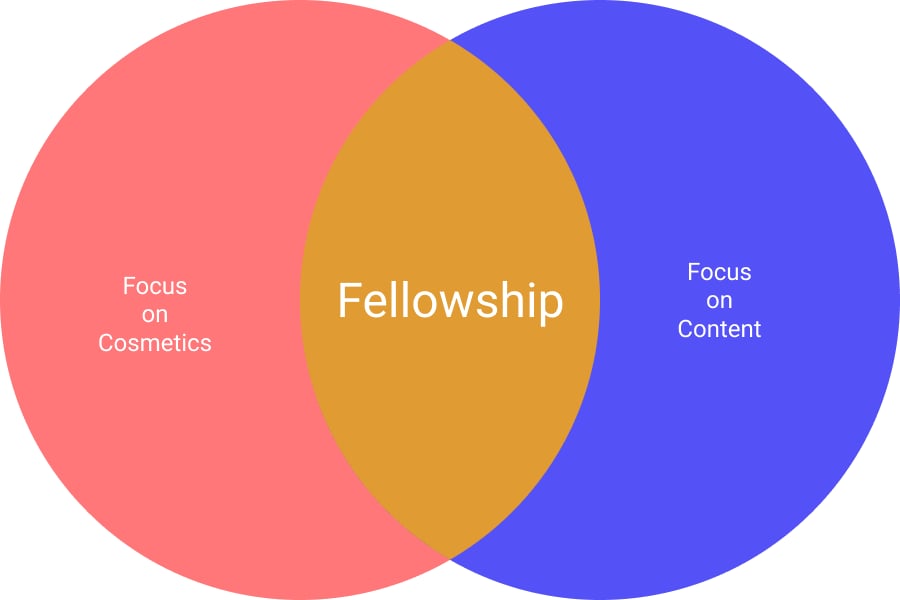
Both of these tasks are demanding for a video game company. In League, skins are accompanied by additional Lore and back stories to get people invested, but developing them also needs animations, artwork, and sound FX. New game content is just as involving requiring all of the above plus software developer resources. Fellowship’s resources are going to spread thin while they try to balance creating and marketing skins to stay afloat as the player base demands fresh content.
Lack of PVP and RPG Elements
So why is this a problem for Fellowship but not for other games that rely on cosmetic revenue like Overwatch, Fortnite, or League? As mentioned earlier, League players seem perfectly fine playing the exact same game over and over again. But the aspect of PVP means that every game isn’t the exact same. Every player moves and reacts slightly differently as well as an added competitive factor that really only gets brought out by beating other players. PVE content gets stale, once you learn the mechanics it truly is the exact same every time. Even as you push to higher keys the mechanics don’t change and neither do the routes. Fellowship is also lacking all of the RPG features that might help convince a player to stay without the need for PVP.
Initial Fee
The initial cost of $24.99 is quite modest, and can’t be enough to support the infrastructure needed for a competitive live service game for very long. When WoW releases a new season of content, players come back and then steadily drop, but Blizzard is mostly fine with this because each time a player comes back they will make money. When Fellowship adds new content there’s no guarantee they will see any more money from returning players, while still having to maintain the infrastructure to support the spike in players.
Conclusion
Fellowship shows a lot of promise with its frictionlessly available end game content and great gameplay, but its biggest hurdle won’t be mechanics, it will be sustaining itself. Fellowship doesn’t have the benefit of a monetization model that naturally aligns with its game design, so unless the developers find a way to balance content production with cosmetic sales, they may struggle to keep players and the game alive long term.